Back office
Quotes, orders, invoices, the ledger, inventory and the CRM, signed in as a staff user.
- Username
demo- Password
golden-demo

Open-source ERP + Qwik storefront · MIT
Fincas is a Django back office for quotes, orders, invoicing, a double-entry ledger, inventory and CRM, and a fast Qwik storefront that sells from the same data, live.
pip install fincas

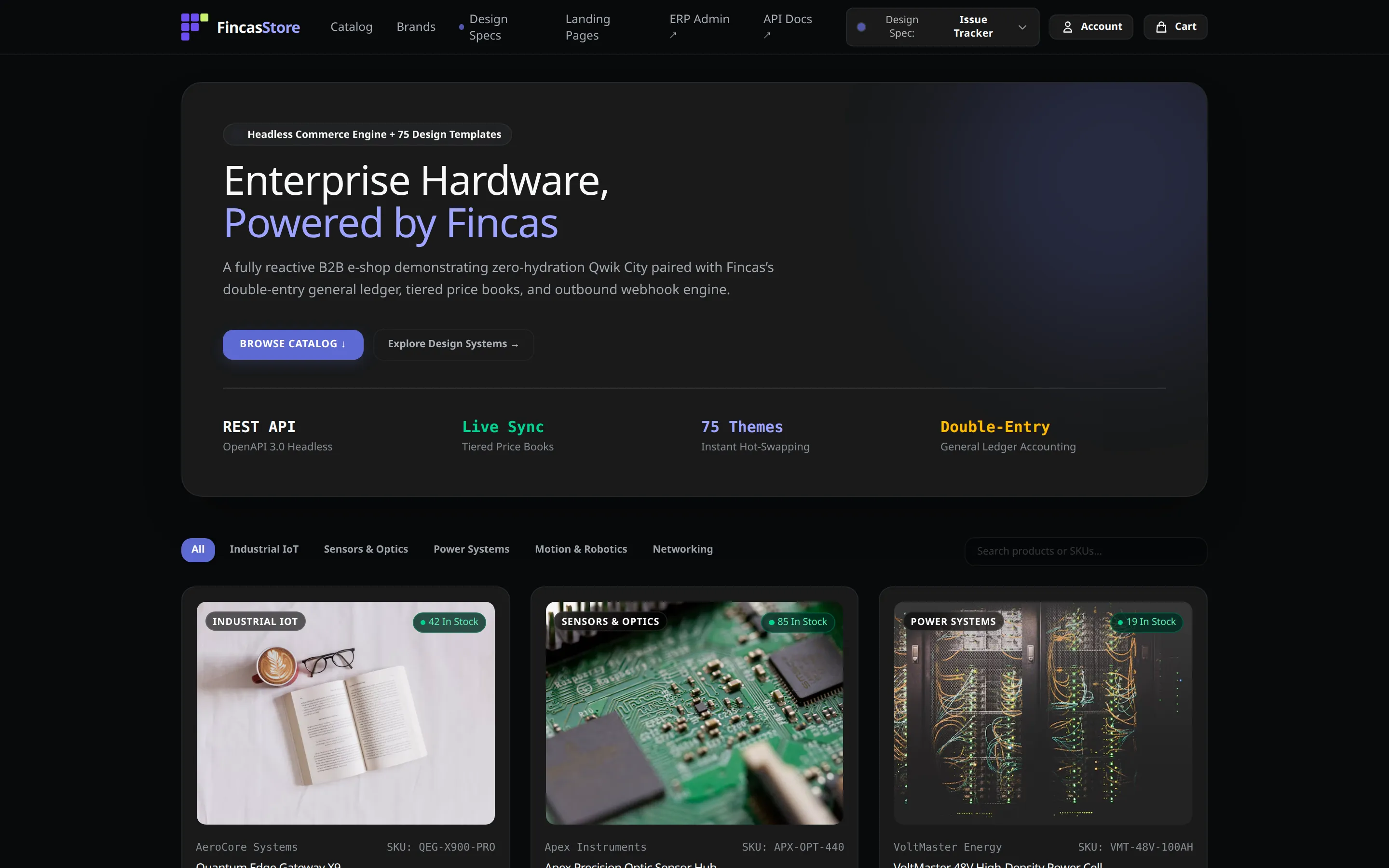
Headless storefront, included
Most shops run an ERP and a storefront as two systems and spend their days keeping them in step. Fincas ships both, in one repository, and the store asks the ERP for everything.
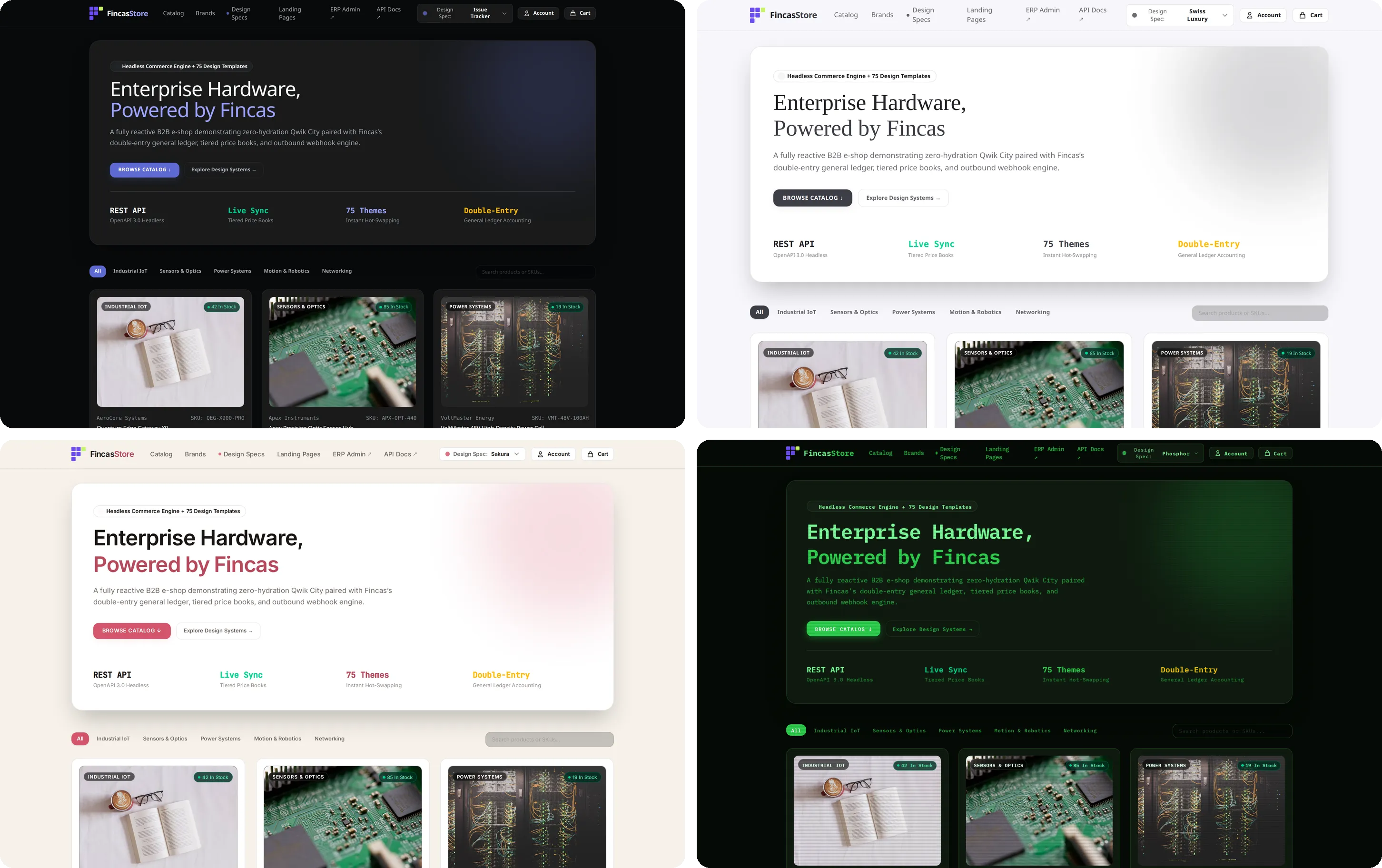
The storefront has no catalog of its own. Products, variants, prices with quantity breaks, stock and SEO text come from the ERP on every request. No feed, no sync job, no second database.
A guest checkout becomes a real sales order with an ERP order number, waiting in the order list for your staff.
Signed-in customers see their profile and orders through the customer portal API, from the records your team works with.
No API key ships to the client. Visitors get a short-lived, least-privilege token that can read the catalog and place a guest order, and nothing else.
Qwik resumes instead of hydrating, so pages ship almost no JavaScript up front, however big the catalog gets.
Reskin the whole store at runtime, start from landing-page templates, and keep Playwright journeys with axe accessibility checks in CI.
Live demo
Two public demos run the current release on sample data: the back office your team would use, and the storefront your customers would see.
Quotes, orders, invoices, the ledger, inventory and the CRM, signed in as a staff user.
demogolden-demoBrowse the catalog, switch between 75 themes, open the landing-page templates and go through checkout.
 Open shop.demo.fincas.dev
Demo data is made up and is restored every night, so anything you change disappears by morning. Outgoing email is switched off.
What's in it
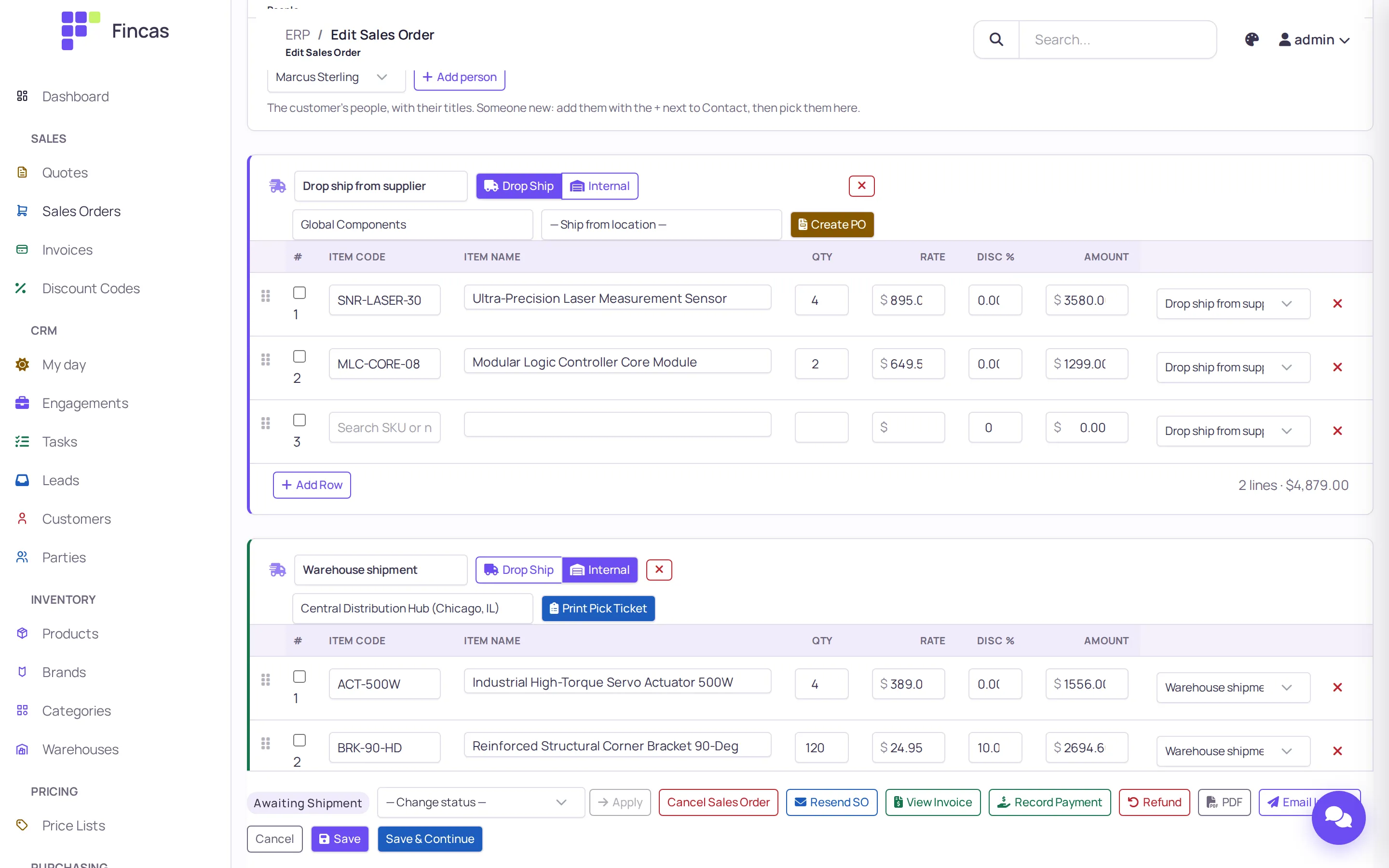
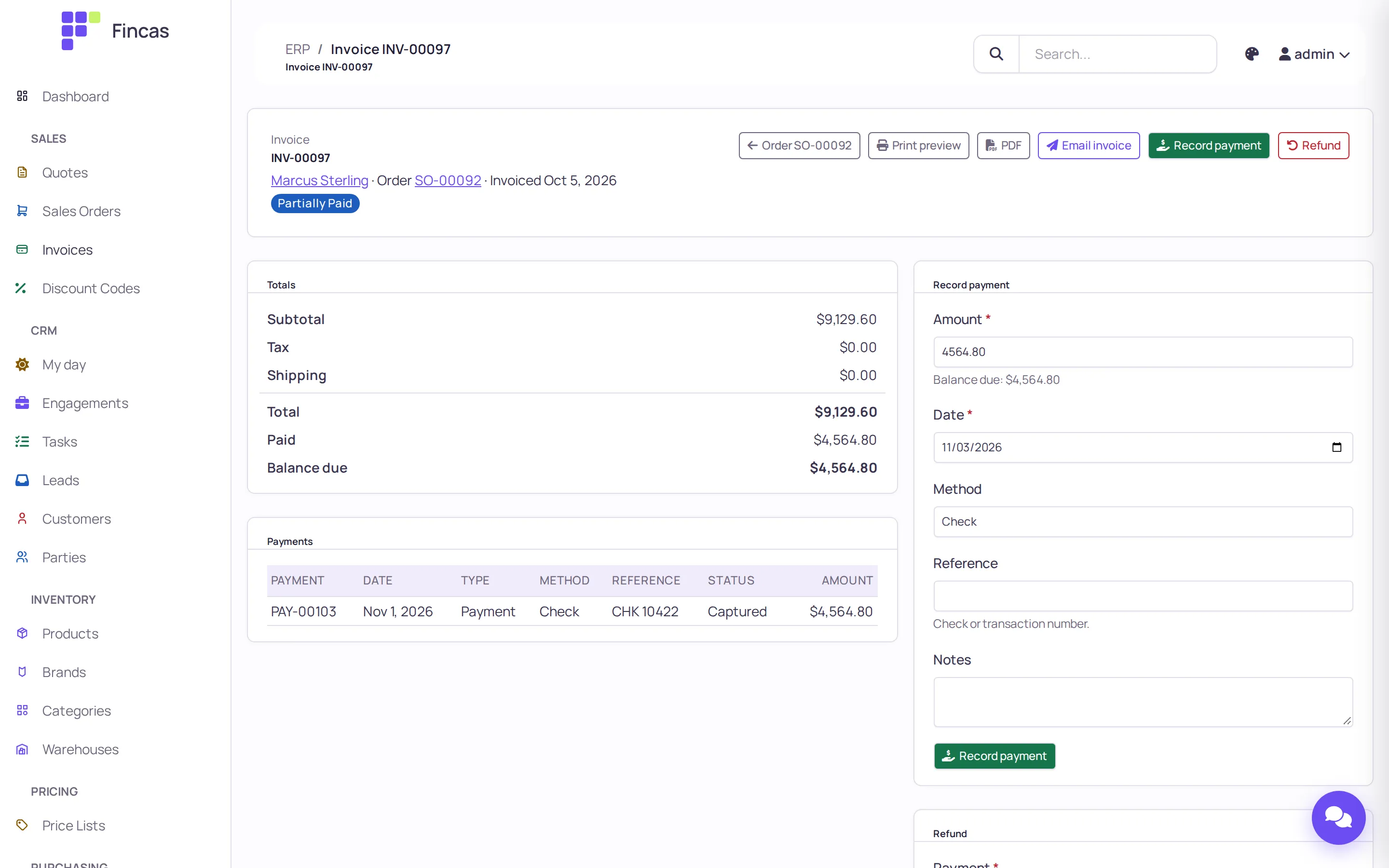
Quotes with revisions, sales orders with shipment groups and drop-ship lines, invoices, payments, coupons, price lists with tier breaks, tax rates.
Multi-warehouse stock, purchase orders and receiving, pick tickets, carrier rates and labels, PDF documents for every step.
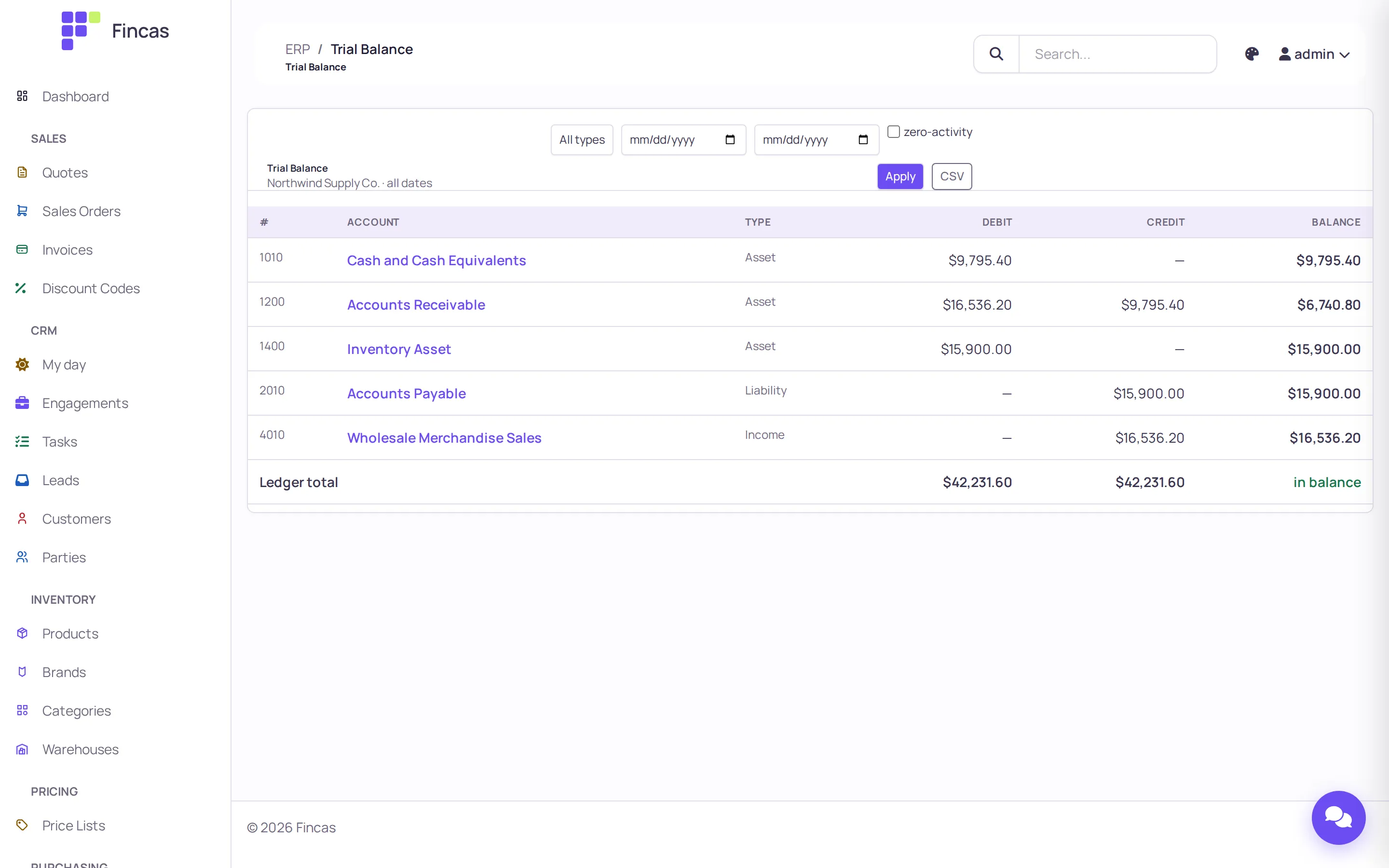
Chart of accounts, fiscal periods, and journal entries posted from documents by rules you configure. Trial balance checks included.
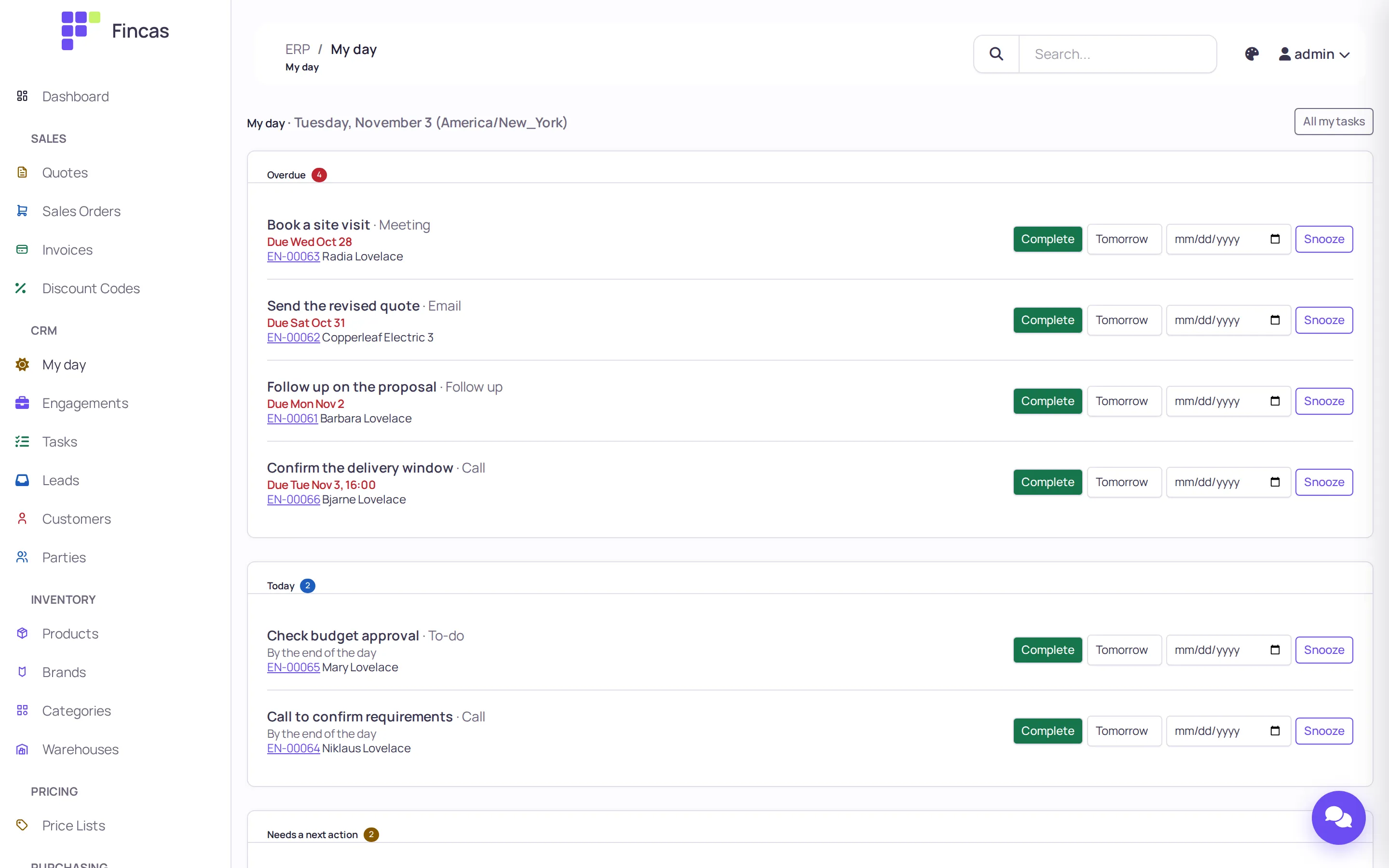
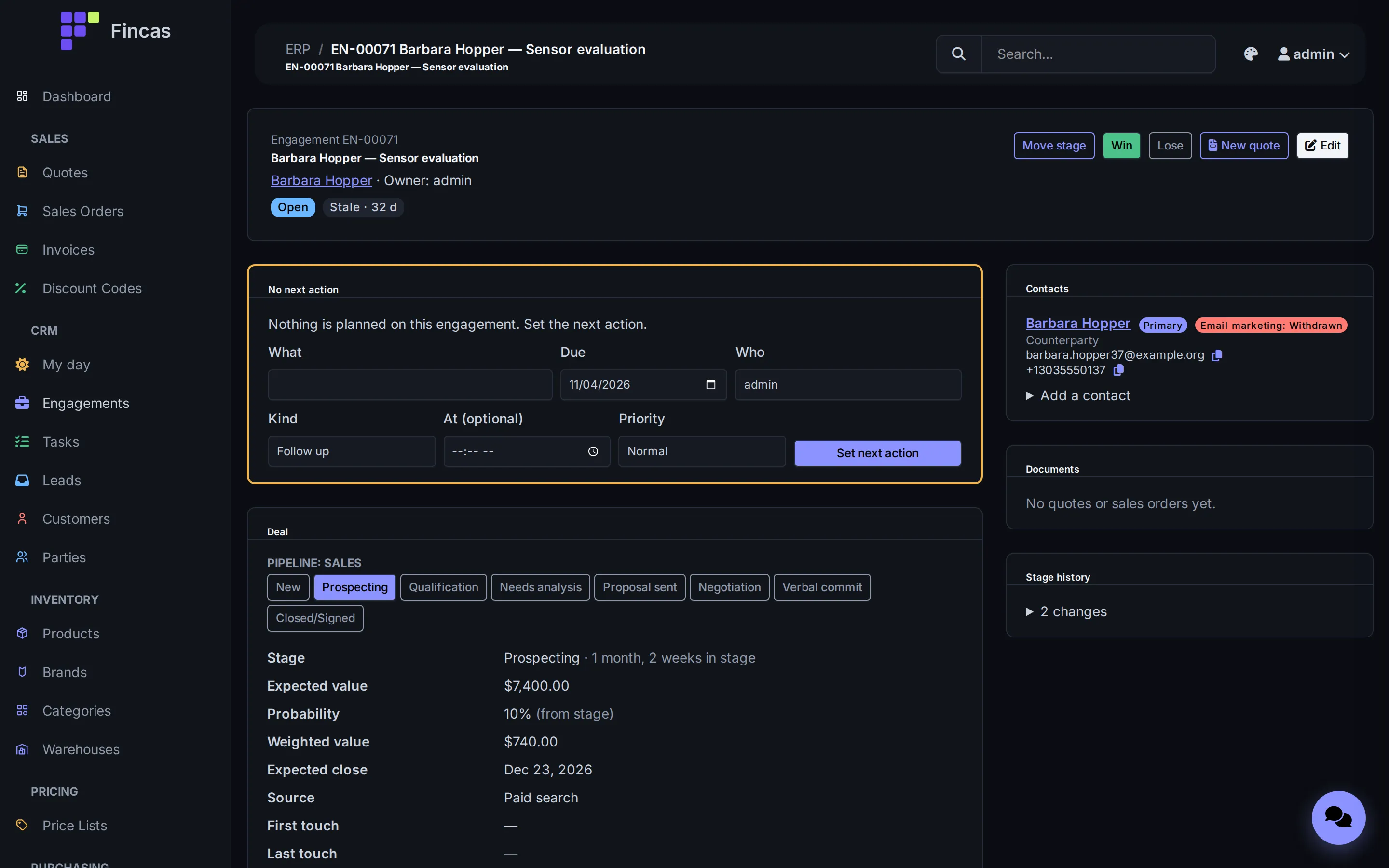
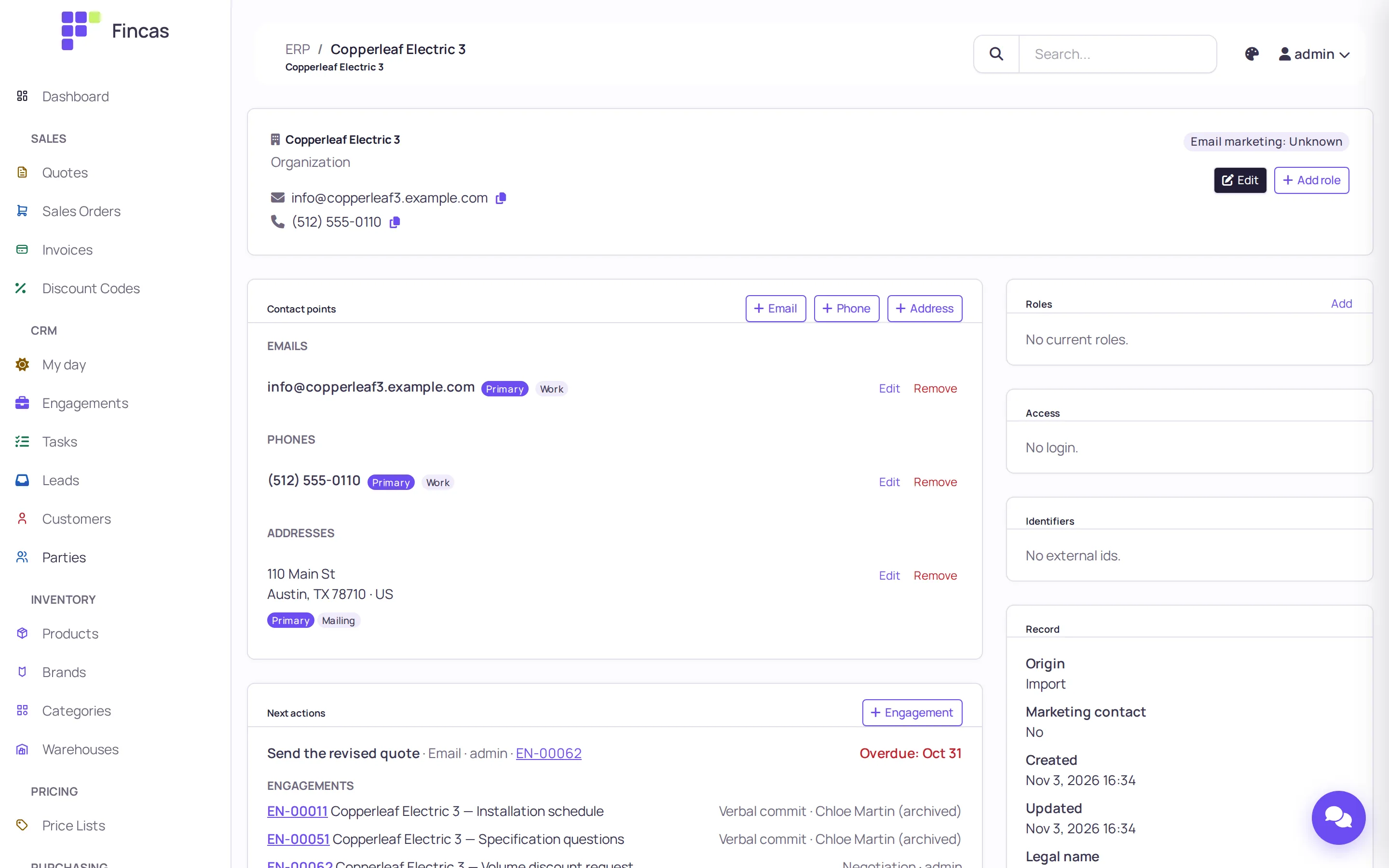
One record per person or organization, with merge, undo and erasure. Leads, pipelines, tasks, communications, and imports from another CRM.
A fast, themeable Qwik City shop that reads the ERP live, plus a REST API with an OpenAPI 3 schema if you would rather build your own.
Plugins add navigation, widgets, payment gateways, carriers and integrations. Signed webhooks, custom fields and renameable nouns, no fork needed.
Screenshots
Every image is a capture of the Fincas back office running with demo data.
A package, not a fork
Fincas ships as a Python package. Your deployment is a small Django project that imports its settings and URLs, so upgrades are a version bump, not a merge. Plugins add what your business needs without touching core files.
# hello_fincas/plugin.py
from core.plugins import BasePlugin


class HelloPlugin(BasePlugin):
    name = "hello"
    verbose_name = "Hello, Fincas"

    def get_nav_items(self):
        return ["type": "link",
            "label": "Hello",
            "section": "analytics",
            "url_name": "erp-dashboard",
        ]

# config/settings.py
GOLDEN_PLUGINS = ["hello_fincas.plugin.HelloPlugin"]
Open source
Bug reports, fixes and documentation are welcome. Security issues go through a private report, not a public issue.